Unified Patent Court: indirect infringement and preliminary injunctions
Two recent cases from the Munich Local Division of the Unified Patent Court (UPC) relate to indirect infringement, leading to the grant of a preliminary injunction. An interesting contrast can be seen in the extent of these injunctions, which varied depending on the case facts.
Background
Article 26(1) of the UPC Agreement defines indirect infringement and states: “A patent shall confer on its proprietor the right to prevent any third party not having the proprietor’s consent from supplying or offering to supply, within the territory of the Contracting Member States in which that patent has effect, any person other than a party entitled to exploit the patented invention, with means, relating to an essential element of that invention, for putting it into effect therein, when the third party knows, or should have known, that those means are suitable and intended for putting that invention into effect.” [Emphasis added].
In short, a patent proprietor can prevent a third party from selling means for putting an invention into effect, provided that:
- The means are an essential element of the invention;
- The proprietor has not exhausted their rights by already placing the invention that would be put into effect on the market (see also Article 29 UPCA); and
- The third party knew or should have known that the means could be used to put the invention into effect.
Hand Held Products Inc v Scandit AG
In ORD_46277/2024, the plaintiff (Hand Held Products Inc) sued the defendant (Scandit AG) for direct and indirect infringement of EP3866051.
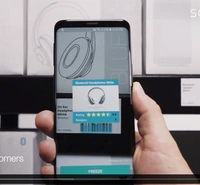
EP3866051 claims a device configured to scan decodable indicia (barcodes), which then displays the barcodes alongside images of the products that are associated with those barcodes. The alleged infringing article was a software development kit (SDK) sold by the defendant. According to the plaintiff, this SDK allowed users to make a device as claimed in EP3866051. As evidence, the plaintiff referred to promotional materials associated with the SDK, which the defendant had produced, and which apparently advertised that the SDK could be used to make infringing devices.
Direct and indirect infringement
Regarding the allegation of direct infringement, the Munich Local Division considered that: “liability for direct patent infringement can only be assumed in such cases if a specifically outlined completion of the patent-compliant device can be expected with certainty” (Headnote 1, emphasis added). It was not considered to be concretely “certain” that the SDK would be used to make an infringing product, and the Munich Local Division therefore ruled that there was no direct infringement.
The level of certainty needed to prove direct infringement was similar to providing a kit of parts, with instructions which could only lead to the production of an infringing article. In this case, it was found that the SDK merely could be used to reproduce an infringing article. Even though this was likely to be the case, as illustrated by the defendant’s own promotional materials, it was not certain enough to establish direct infringement.
However, the Munich Local Division further ruled that there was indirect infringement, because the SDK represented an essential means for reproducing the invention. In this respect, the SDK was considered essential for enabling users to make allegedly infringing devices, even though the users would have to supply their own device hardware and software to do so.
Preliminary injunction
A preliminary injunction was awarded against the defendant. In determining the extent of the prohibition, the Munich Local Division assessed the case-specific factors and interests.
The plaintiff argued that the alleged infringement caused significant damage and loss of market share since the SDK was widely used, and that this could not be compensated monetarily. The defendant argued that the patent was invalid, the plaintiff had unreasonably delayed (around two years) in initiating proceedings, and that a preliminary injunction unduly disrupt its business, especially considering that the SDK also had non-infringing uses.
Interestingly, the Munich Local Division limited the defendant to three invalidity attacks in assessing the need for a preliminary injunction (none of which was found convincing). The court also held that the plaintiff bringing proceedings immediately after the patent had granted was not an undue delay.
Ultimately, the court granted a preliminary injunction requiring the defendant to actively remove the cause of infringement from the SDK, rather than merely warning its customers not to use the SDK in an infringing manner. Nevertheless, the injunction only required the infringing functionalities to be removed from the SDK, that is, via an update, rather than banning the sale of the SDK outright. The Munich Local Division considered that this balance reflected the possible non-infringing functions of the SDK, whilst avoiding undue disruption to the defendant’s business.
Brita SE v Aquashield
In ORD_69429/2024, the plaintiff (Brita SE) sued the defendant (Aquashield) for direct and indirect infringement of EP2387547.
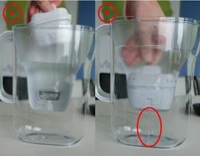
EP2387547 claims a valve actuating device for use in a filter jug, wherein the valve controlling the water outflow remains closed unless a filter cartridge is inserted. The valve actuating device, filter cartridge and jug were individually claimed in EP2387547. However, only the claim to the filter jug survived a counterclaim for revocation.
The defendant marketed and sold a filter cartridge, which the plaintiff maintained was an indirect infringement of the remaining claim directed to a filter jug in EP2387547.
Indirect infringement
The Munich Local Division considered the filter cartridge to be an essential means for making the invention, because the filter cartridge treats water, which is the main purpose of a filter jug. The filter cartridge also comprises the valve actuating device.
The defendant argued that the plaintiff’s rights had already been exhausted, because the filters were to be used in filter jugs that the plaintiff had already placed on the market.
The Munich Local Division provided some guidance as to when exhaustion of rights may occur: “If the replacement of the part in question is normally to be expected during the lifetime of the product, and if the purchasers therefore may legitimately expect to be able to continue to use or make repeated use of the acquired product by means of the replacement part, this will as a rule be regarded as a permissible use of the patented product placed on the market. The situation is, however, exceptionally different where the technical effects of the invention are reflected precisely in the part that is replaced” (Headnote 8).
However, it was ultimately decided that the original filter jugs placed onto the market by the plaintiff did not fall within the scope of the patent claims. Allegedly infringing articles were only made when the defendant’s filter cartridges were inserted into the plaintiff’s marketed filter jugs.
As such, the court found that there was no exhaustion of patent rights due to the sale of the plaintiff’s filter jugs, and that there was indirect infringement due to the sale of the defendant’s filter cartridges for use in those jugs.
Preliminary injunction
The Munich Local Division granted a preliminary injunction, considering that the prohibition had to balance between: “on the one hand, commercial transactions involving the contested object outside the scope of the property right remain unaffected and, on the other hand, the direct infringement of the patent by the purchaser is excluded with sufficient certainty” (Headnote 9).
In this case, a relevant factor was that the alleged indirectly infringing article (the filter cartridge) could also be used outside the scope of the patent, that is, in non-infringing filter jugs.
The Munich Local Division ordered the defendant to issue a warning, instructing distributers not to use the defendant’s filter cartridges in an infringing way. Given that end users could not be expected to assess infringement, the warning issued to end users extended to any of the plaintiff’s relevant branded water jugs.
Key conclusions
- At the UPC, a toolkit (SDK) can indirectly infringe a device claim, even when the end user has to use their own materials and tools (hardware and software) to make an infringing device.
- At the UPC, patent rights may not be exhausted when a product placed on the market by the proprietor does not fall within the scope of the claims; even when that same product is later part of the invention being “put into effect” via an indirect infringement.
- The UPC Munich Local Division takes a flexible approach to preliminary injunctions, altering the extent of the prohibition based on the facts of the case.
Case details at a glance
Jurisdiction: UPC
Decision level: Munich Local Division
Parties: Scandit AG v Hand Held Products Inc
Citation: ORD_46277/2024
Date: 27 August 2024
Decision: dycip.com/upc-ord-46277-2024
Jurisdiction: UPC
Decision level: Munich Local Division
Parties: Brita SE v Aquashield Europe sro, Gasmarine BV Srl, MGR26 Société à responsabilité limitée
Citation: ORD_69429/2024
Date: 22 August 2025
Decision: dycip.com/upc-prd-69428-2024