IPEC insights: Automobile Club de l’Ouest v Omologato Ltd – court brings free-riding on LE MANS watches to a screeching halt

In Automobile Club de L’Ouest (ACO) v Omologato Ltd, the Intellectual Property Enterprise Court (IPEC) found that uses of LE MANS, LM and LMR by a watch manufacturer infringed the claimant’s class 14 marks under sections 10(1), 10(2) and 10(3) of the Trade Marks Act 1994. The decision, delivered by Deputy High Court Judge David Stone on the day of the trial, is a useful reminder of the breadth of protection enjoyed by famous marks, especially in the context of ambush marketing.
Background
Automobile Club de L’Ouest, the operator of the 24 Hours of Le Mans endurance motor race, alleged that the defendants’ use of the signs LM, LMR and LE MANS in relation to watches infringed its trade marks for LM and two figurative LE MANS and 24H LE MANS marks (shown below), all of which cover watch-related class 14 goods.
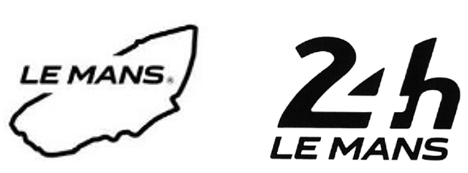
Image source UKIPO trade mark https://dycip.com/ukipo-lemans-1 and https://dycip.com/ukipo-lemans-2.
Double identity
Whilst the defendants did not attend the trial, the judge noted that there was no clear basis for resisting a section 10(1) infringement finding. Automobile Club de L’Ouest’s evidence clearly showed that the defendants used the LM sign to identify the commercial origin of their watches (that is, identical goods), that the use was in the course of trade, without Automobile Club de L’Ouest’s consent and in a manner that was liable to affect the functions of Automobile Club de L’Ouest’s trade mark.
Likelihood of confusion
The defendants’ use of the LE MANS and LMR signs was also found to infringe Automobile Club de L’Ouest’s figurative LE MANS and 24H LE MANS trade marks under section 10(2). Among other things, the judge noted that the average consumer of watches will pay slightly more attention to the purchase of a watch, but some watches are expensive whereas others are not. In relation to the LMR sign in particular, the judge found that, whilst the LM and LMR marks were both short, the former appears wholly in the latter, that reasonably circumspect consumers generally pay attention to the start of a trade mark, and that infringement is context-specific. To that end, the fact that Omologato used the LMR sign in the context of its other uses of the LE MANS sign and references to the Le Mans race did not help the defendants and made confusion more likely: at least a significant proportion of consumers would think that the brand was in common ownership with or licensed by Automobile Club de L’Ouest.
Unfair advantage
It is worth noting that, although the defendants argued that the claimant had no customers or physical presence in the UK (and therefore no reputation) that submission was firmly rejected. Automobile Club de L’Ouest’s evidence showed that many UK-based customers buy tickets to travel to the Le Mans race and many also watch the race on television. The judge had no doubt that the LE MANS trade mark had a reputation, that it had acquired distinctiveness through use and that it was known to a significant part of the public (at least in relation to “entertainment in the nature of motor racing”).
Accordingly, Automobile Club de L’Ouest was able to successfully argue that Omologato’s activities took unfair advantage of its reputed LE MANS trade mark under section 10(3). Deputy Judge Stone described the defendants’ actions as a “classic case of free-riding”: they set out to take advantage of the prestige of the Le Mans race and used identical or similar signs to bolster sales of their own watches.
Joint liability
Omologato’s director (the second defendant) was found to be jointly liable because he designed and named the watches in issue, approved advertising copy, responded to pre-action correspondence on behalf of Omologato, and owned the LMR mark (discussed below) in his own name.
A note on defences
The defendants put forward a number of unsuccessful defences, which ultimately could not be relied on. These included:
- The defendants’ alleged prior sponsorship of teams and drivers in Le Mans races. The allegation was not supported by evidence and was considered fanciful.
- The claimant’s delay in taking action against the defendants. The facts showed that Automobile Club de L’Ouest objected early and often, and ultimately resorted to filing court proceedings because Omologato failed to change the way in which it named and promoted watches.
- Reliance on the defendants’ allegedly descriptive use of the claimant’s marks. Bearing in mind the “ambush marketing” context and the fact that the defendants, as non-sponsoring traders, sought to take advantage in trade by associating themselves with Automobile Club de L’Ouest’s reputed marks, the defence failed. Among other things, the facts did not indicate that the defendants acted fairly in relation to Automobile Club de L’Ouest’s legitimate interests.
- Reliance on the second defendant’s trade mark registration for the LMR mark. The registration was invalidated (for broadly speaking the same reasons as those for which the infringement arguments concerning the LMR sign succeeded).
- Section 10(6) of the Trade Marks Act. This was a “home-grown” comparative advertising defence which was repealed in 2019 and is now no longer available to use.
Key takeaways
The judgment demonstrates that courts closely scrutinise all allegations made by parties in infringement proceedings and pay close attention to the relevant commercial context in which signs are used. Traders would be ill-advised to argue that referring to sports events constitutes descriptive use where the objective circumstances indicate an attempt to benefit from the commercial repute of well-known trade marks. Whether use is descriptive or is “trade mark use”, and whether a likelihood of confusion or unfair advantage arises, depends heavily on the context in which the signs in issue are used.
Case details at a glance
Jurisdiction: England & Wales
Decision level: IPEC
Parties: Automobile Club De L’Ouest (ACO) v Omologato Ltd & Anor
Date: 27 July 2026
Citation: [2026] EWHC 2265 (IPEC)
Decision: https://dycip.com/2026-ewhc-2265-ipec