IPEC insights: Easygroup v Easyfeetstore - easyGroup’s claims of infringement, passing off and invalidity left flatfooted again


The Intellectual Property Enterprise Court (IPEC) finds that having the common word “easy” is not enough for a finding that EASYFEET infringes easyGroup’s rights
Background
EasyGroup Limited (easyGroup) claimed Easyfeetstore OÜ & Ors (Easyfeet) infringed its trade mark rights relying on s.10(2) and 10(3) Trade Marks Act 1994 (TMA) and passing off. It also brought an invalidity claim against Easyfeet’s UK trade mark EASYFEET registered in class 10 in respect of orthopaedic soles.
Easyfeet sells orthopaedic and orthotic insoles and related accessories online in several territories including the UK under the name “Easyfeet” and the sign shown below:
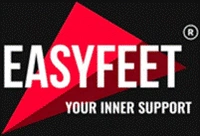
EasyGroup relied on seven marks including, inter alia, EASYJET (class 39), EASYFOOD (classes 16, 35, 39 and 42), EASYGROUP (class 35) and those shown below:



The court’s approach
In the judgment, His Honour Judge Hacon noted “the obvious difficulty for easyGroup in asserting public recognition of an 'easy' family of marks is that the only feature common to all of them is the word 'easy', a conspicuously descriptive word”.
The judge acknowledged that it has been established that the existence of a family of marks which share common features can increase the likelihood of confusion if an accused sign uses one or more of the common features (see W3 Ltd v easyGroup Ltd [2018] EWHC 7 at [234]). However, despite having brought 76 claims since 2015 (most in the general IP list without the constraints of IPEC), easyGroup has never produced the requisite evidence to support the proposition that the use of the “easy” prefix would be seen by consumers as a reference to easyGroup alone.
In relation to the confusion claim, it was held that easyGroup had not shown relevant similarity between any of its seven marks and Easyfeet’s signs, and in six of the seven marks there were also no similarities in goods or services. The absence of any evidence of actual confusion was consistent with the conclusion that no confusion was likely.
The reputation claim failed for the same reason. The court was not persuaded that consumers would assume a connection between easyGroup and Easyfeet’s orthopaedic insole business. It was therefore found that no link existed between any of the marks and the signs.
It was also held that an invalidity claim would be dependent on a finding of infringement under s.10(2) and 10(3) TMA or passing off. Therefore, easyGroup’s invalidity claim also failed.
Conclusion
The decision is a useful reminder that trade mark disputes remain highly fact specific and context dependent.
Even where a claimant has a strong and well-known brand, it still has to prove the harmful effect that the defendant’s brand will have.
Ordinary words with wide commercial use are not automatically off limits, and a claimant cannot convert a common prefix into a monopoly simply by building a family of marks around it. Reputation may support a claim, but it does not displace the need to show that the relevant public would in fact make a link between two allegedly conflicting marks.
Case details at a glance
Jurisdiction: England & Wales
Decision level: IPEC
Parties: Easygroup Ltd v Easyfeetstore OU & Ors
Date: 01 April 2026
Citation: [2026] EWHC 767 (IPEC)
Decision: dycip.com/2026-ewhc-767-ipec
Related case
W3 Ltd v easyGroup Ltd [2018] EWHC 7 at [234]: dycip.com/2018-ewhc-7